
Arrangementer

Samling for bærekraftsledere hos Drytech

Bærekraft rapporteres i stort omfang. Men rapportering alene overbeviser ikke et styre. Det som overbeviser er avkastning: hvilken effekt har bærekraftsarbeidet på lønnsomhet, risiko og verdiskapning. Oppgaven er ikke bare å dokumentere innsats. Den er å bygge et forretningsargument som holder, både i styrerommet og i markedet.
Hvordan omsettes bærekraftstiltak til tall styret forstår? Og hvilket narrativ får eierne til å se bærekraft som en investering, ikke en kostnad?
Drytech, best kjent for merkevaren Real Turmat, arbeider målrettet med bærekraft som en integrert del av strategi og daglig drift. For dem handler "Vårt Ansvar" om konkrete valg og kontinuerlig forbedring, blant annet gjennom redusert matsvinn og bedre ressursbruk. Dette skal de dele med nettverket.
Dette danner utgangspunkt for en felles diskusjon om hvordan deltakerne selv jobber med å vise verdien av bærekraft, og hvor det fortsatt er vanskelig å få gjennomslag.
Living Wages in Practice - Part 1
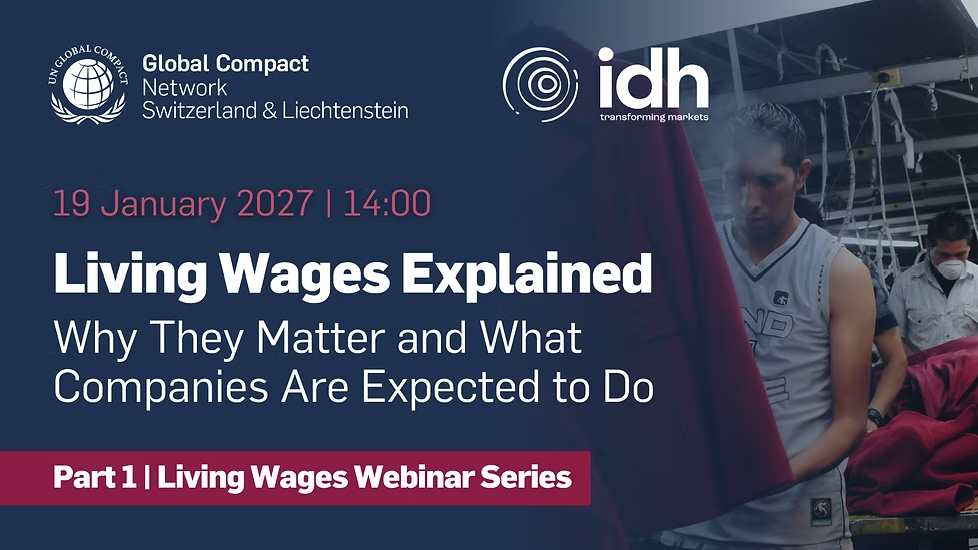
Living wages are quickly becoming a central topic in responsible business conduct, human rights due diligence and sustainability reporting. But what exactly is a living wage, and what does it mean for companies in practice?
This introductory webinar of our four-part series "Living Wages in Practice: Turning ambitions into actions" explores what a living wage means in practice and how businesses can advance living wages and contribute to meaningful progress.
What we will cover
The basics: what a living wage is and why it matters for your business
Methodologies and benchmarks: the key approaches used to assess living wages
Regulation and global initiatives: how they are driving corporate action
Company insights: companies already working on living wages share their approaches, experiences and lessons learned
What you will take away
A better understanding of how your company can advance living wages, and where to start.
Language
This webinar will be conducted in English.
Learning from Local Perspectives: Strengthening Human Rights Due Diligence Through Ground-Level Expertise
As companies strengthen their human rights due diligence processes, many face a practical challenge: how to identify, access, and responsibly engage the people who understand local risks and realities best. This webinar will explore practical approaches for accessing ground-making perspectives to strengthen risk identification, stakeholder engagement, and business decision-making. Audits, supplier questionnaires, and desk-based assessments remain important tools, but they do not always capture the perspectives of workers, communities, civil society actors, and other local human rights experts who often have the clearest view of emerging risks and impacts on the ground.
This webinar will explore how companies can incorporate local expertise into their human rights due diligence processes to strengthen risk identification, improve stakeholder engagement, and support better business decision-making.
Drawing on lessons from emerging practice, participants will discuss practical approaches to identifying and engaging local experts and stakeholders in ways that are meaningful, confidential, and aligned with a "do no harm" approach. The session will also feature insights from The Bridge, an initiative of the Geneva Center for Business and Human Rights that supports companies in accessing informed local perspectives in higher-risk contexts.
Rather than asking whether stakeholder engagement matters, the webinar will focus on a more practical question: how can companies collect and use local expertise to better understand material human rights risks in their supply chains and operating environments?
Learning Objectives
Participants will:
Understand how local expertise can strengthen human rights due diligence and risk identification.
Explore practical approaches for identifying and engaging relevant local stakeholders and experts.
Learn how local perspectives can complement conventional due diligence tools such as audits and supplier assessments.
Discuss how to engage local actors safely, responsibly, and confidentially using a "do no harm" approach.
Consider how stronger local intelligence can support better business decisions and more effective management of human rights risks.